
What happened?
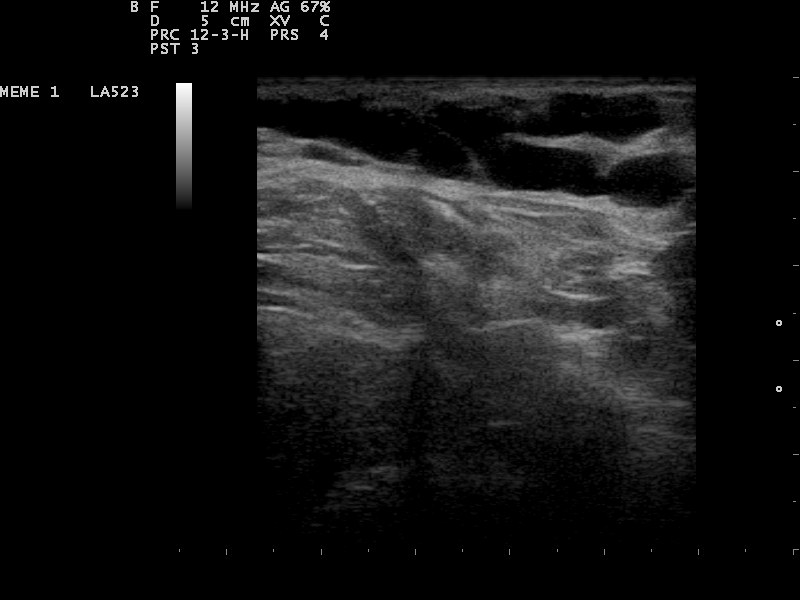
Researchers describe SECNet, a deep‑learning network for classifying breast lesions on ultrasound that jointly models evolving spatial and channel attention plus uncertainty‑driven residual refinement. Evaluated on a public breast ultrasound dataset, SECNet achieved mean accuracy 91.8 ± 0.7%, Micro‑F1 91.4 ± 0.8% and mean AUROC 98.5%, outperforming many benchmark models.
Why does it matter?
Ultrasound images often have low contrast, speckle noise and overlapping benign/malignant features; the authors propose that adapting attention during training and selectively refining uncertain features reduces overconfident mistakes and improves robustness on retrospective data.
How to interpret the evidence
The work is a methodological advance in image classification and uncertainty estimation using a stratified, reproducible experimental design on a public dataset. It demonstrates potential for supporting decision tools, but remains an algorithmic evaluation rather than clinical validation.
What remains uncertain?
This report does not demonstrate clinical benefit or regulatory approval, nor does it guarantee equal performance across different devices, populations or clinical settings. The findings are based on a public retrospective dataset; local applicability in Malta or the EU depends on independent validation, prospective testing and regulatory review.
Medical News provides general health education. Individual treatment decisions depend on your circumstances and the advice of your clinical team.
This summary was prepared with AI assistance and checked automatically against the linked primary source. It has not been individually reviewed by a clinician.


